
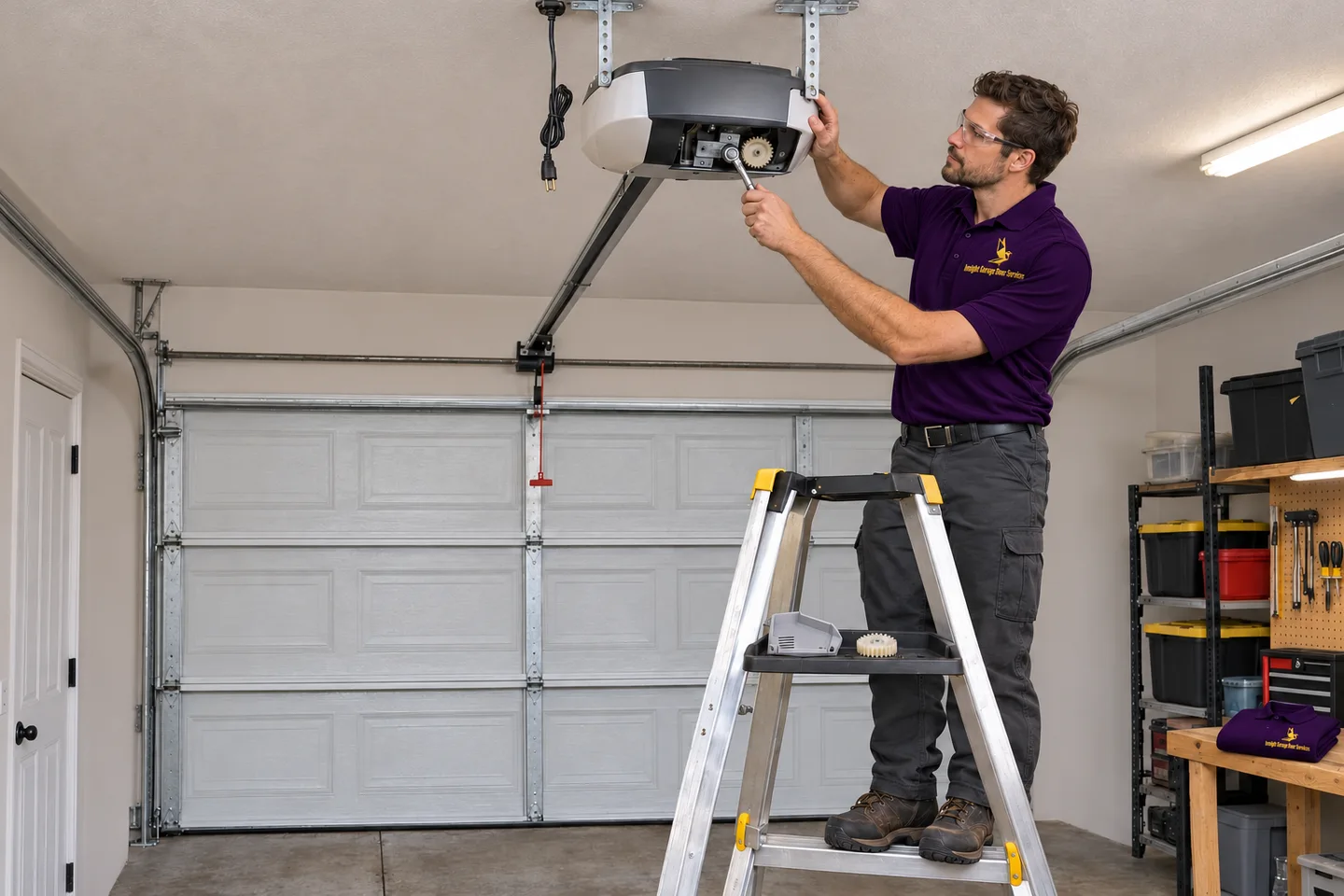
Start with the behavior, not a replacement guess
An opener problem can appear in several ways: a motor that runs without moving the door, an unresponsive wall control, intermittent remote operation, or a door that stops at the same point. Describe whether every control produces the same result. A single remote behaving differently from the wall button is useful information, but it does not establish the full diagnosis by itself.
If you are searching for garage door repair near me because the motor sounds strained, mention any scraping, shaking, or uneven movement as well. The opener is only one part of the assembly. Worn rollers, damaged tracks, and an unbalanced door can affect how it operates. Replacing the motor without considering those conditions may leave the underlying difficulty unresolved.
Sensors, travel, and control issues
Safety sensors, control wiring, power supply, travel settings, and drive components can all be relevant to an opener assessment. A closing problem may involve an obstruction or sensor issue, while a running motor with no door movement may require attention to the drive mechanism. Model information and indicator-light behavior can help guide the initial conversation.
Never bypass the safety sensors or increase force settings to push through resistance. Leave adjustment and testing to someone familiar with the equipment and follow the manufacturer’s instructions for ordinary user tasks. If the door is tilted, has a visibly broken spring, or has damaged cables, stop operating it and address that mechanical concern before treating the symptom as a control fault.
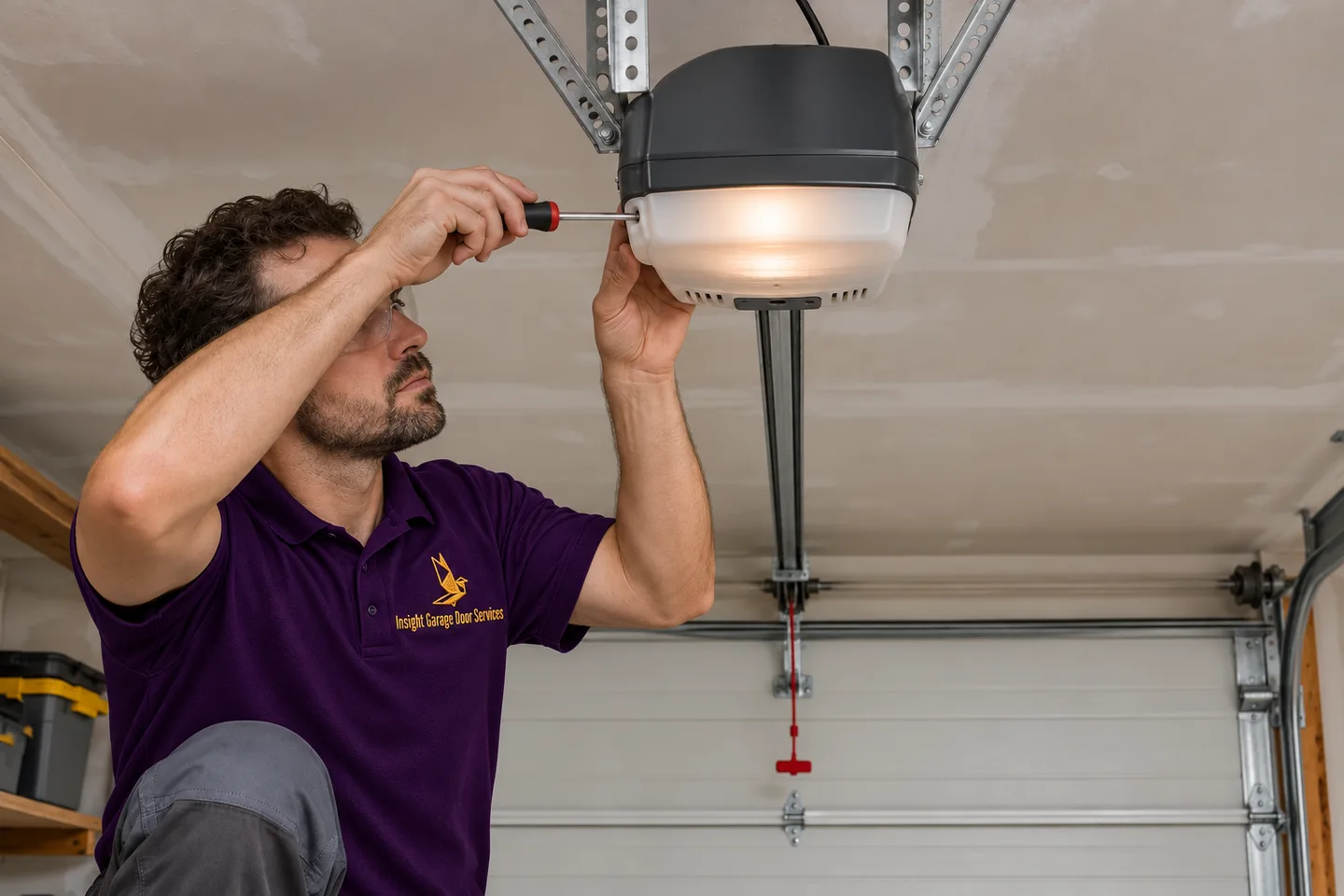
Repair or replacement: useful questions to ask
The right decision depends on the nature of the fault, parts availability, the condition of the equipment, and compatibility with the door. Ask which component has failed and whether repairing it is practical. If replacement is recommended, discuss the reasons, suitable controls, and any features you actually need rather than selecting equipment solely by headline motor power.
Our garage door repair in Canton, CT is presented around clear service categories so you can understand related work. The spring-repair page explains counterbalance concerns, and the maintenance page covers broader inspections. A quieter opener cannot by itself eliminate noise from worn hinges or rollers; the source of the sound should shape the solution.
Arrange an opener assessment
Before calling, note the opener’s make and model if its label is safely visible from the floor. Tell us whether the door is open, closed, or partly raised and whether a vehicle is stuck inside. You can also explain when the problem started and whether a power interruption or a change in door movement preceded it.
Canton homes with attached garages may place particular value on quieter operation, while a detached garage may raise different questions about controls and access. If you need a garage door repair service near me, call Insight Garage Door Services at (860) 847-8258. We are open 8 AM to 8 PM every day; scheduling and parts availability are discussed when you contact us.
Questions homeowners ask
Why does my garage door reverse?
Possible causes include an obstruction, sensor trouble, travel issues, or mechanical resistance. Do not bypass the safety system; arrange assessment if the cause is unclear.
Does a running motor mean I need a new opener?
Not necessarily. Drive components, connections, and the door itself need consideration before choosing repair or replacement.
What information is useful when I call?
Share the symptoms, which controls work, the door’s position, and the make and model if you can read the label safely.
Can a heavy door affect the opener?
Yes. The opener relies on a properly balanced door. A counterbalance issue needs attention rather than compensating with more motor force.
Do you guarantee same-day repair?
No fixed arrival or completion time is promised. Call during our daily 8 AM to 8 PM hours to discuss the schedule and required parts.